Panel
Tenancy
Split a panel between teams, shops or companies, with records kept in their tenant for every query.
Every page moves under /admin/{tenant}.
$panel->tenant(Team::class, slugAttribute: 'slug');
Say who belongs where on your user model.
use Illuminate\Database\Eloquent\Model;
use Illuminate\Support\Collection;
use Xelqun\Panels\Contracts\HasTenants;
use Xelqun\Panels\Contracts\PanelUser;
use Xelqun\Panels\Panel;

class User extends Authenticatable implements HasTenants, PanelUser
{
    public function getTenants(Panel $panel): Collection
    {
        return $this->teams;
    }

    public function canAccessTenant(Model $tenant): bool
    {
        return $this->teams()->whereKey($tenant)->exists();
    }
}
Ownership
Each resource's model needs a relationship to the tenant, named after it, such as team(), unless you pass ownershipRelationship, or set $tenantOwnershipRelationship on the resource. It can be a belongs-to or a many-to-many.
Set $isScopedToTenant = false on a resource that isn't owned by a tenant.
What stays inside
Inside a tenant, those models stay in it for every query of the request: tables, search, Select options, widgets, scopedUnique(), scopedExists() and your own code.
New records join the tenant on their own, and it never comes from the browser. A tenant the user isn't in is a 404, and taking someone out works at once, even on an open page.
Registering and editing
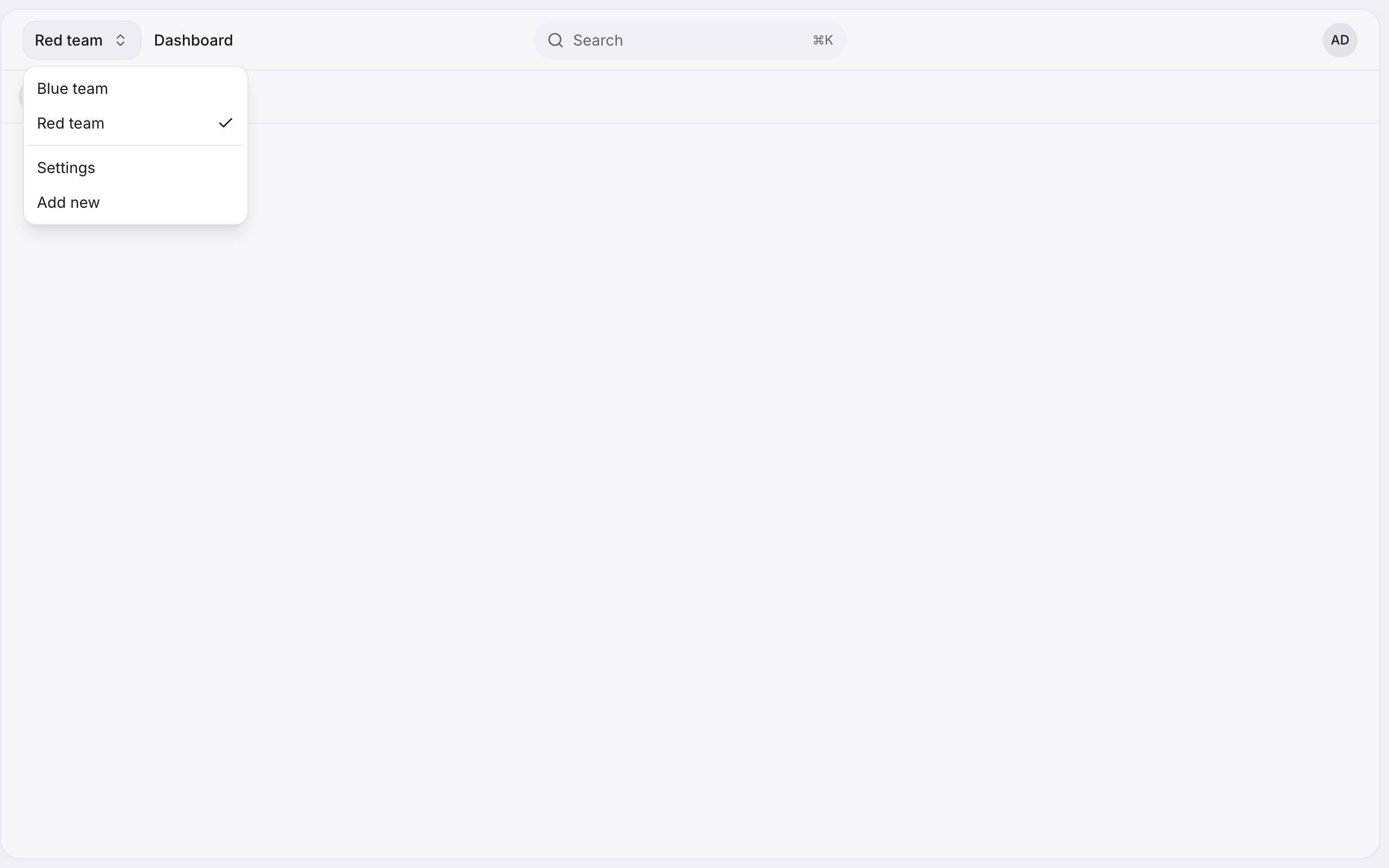
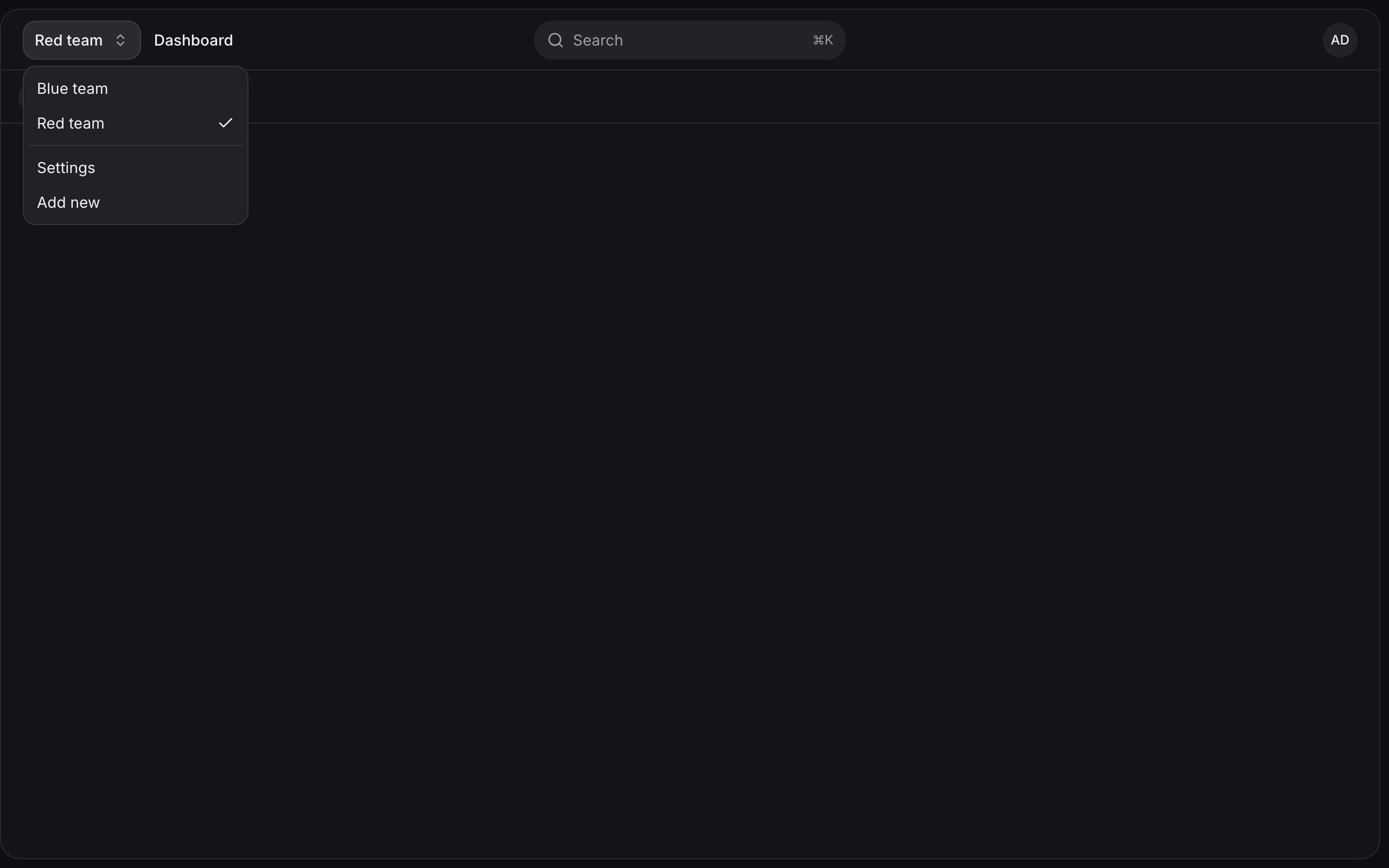
A switcher moves between tenants, in the sidebar or, with topNavigation(), the top bar.
$panel->tenantRegistration(RegisterTeam::class)->tenantProfile(EditTeam::class);
tenantRegistration() lets a user start a tenant, and is where someone with no tenants lands. Its form has to add the user in afterSave().
tenantProfile() adds a page to change one, which needs update in the tenant's policy. Both take a Form class.
Notifications belong to the user, not the tenant. Tenant billing isn't built in.